Category: Insights

  • A Tribute to Dorothy Cotton

    “So, I ask here, What’s next for our country, For the world? The same old questions and the same old answers? No! That just won’t do! A twenty-first century Citizenship Education Program approach, combining lessens from the historic movement with modern technology and new ways of seeing and understanding our problems and challenges, just might be the answer…”

    Dorothy Cotton
    If Your Back’s Not Bent: The Role of the Citizenship
    Education Program in the Civil Rights Movement

    The current coronavirus global pandemic as well as global unrest ignited by George Floyd’s murder has produced a new focus on questions of justice, institutional accountability, and the need for systemic change. These days have caused me to reflect on the role Dorothy Cotton played in shaping the Civic Organizing-MACI Model.   

    Dorothy Cotton was the Director of Education for the Southern Christian Leadership Conference (SCLC) during the Civil Rights Movement. She was the only woman on the SCLC executive team and worked alongside Martin Luther King, Andrew Young, Septima Clark, and other civil rights leaders in establishing the Citizenship Education Program (CEP) located at the Dorchester Center in McIntosh, Georgia. The CEP program became the SCLC leadership development and organizing arm for SCLC. It was a primary inspiration for civic organizing agencies permanently embedded within institutions being the means for sustaining democracy as a just system of governance. Civic organizing agencies are the “21st-century active citizenship schools”.  

    I was in the audience in 1993, when Dorothy was describing how leaders were recruited to the 1960’s Citizenship Education Program. They were individuals playing a leadership role in fighting inequity and brutality in their community. The curriculum was interactive, expertise was in service to capacity building, and methodology was based upon open-ended questions that linked the particular experiences brought by participants to the role of citizenship: What does it mean to function as a citizen in these times? Do citizens in fact have real power? What is this power? Can they know this power? How do we work together in this decade of unavoidable diversity?  What is the role of government; indeed, what is government? What is the role of the citizen? Do citizens have real governing responsibilities?   

    In the 5 day training, individuals developed a new sense of power and role as it related to their challenges, strategies were developed, barriers to voting were addressed including teaching people how to write cursive and to read passages from the constitution, and participants left with a plan to take on the particular problem in their community, as well as a plan for organizing community voter registration and marches.  Most importantly, participants were expected to, and did, recruit other leaders from their community to attend the next monthly session, building a local base of civic leadership to support change. 
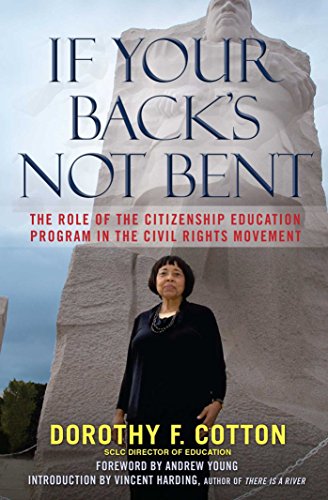
    I knew the story of the citizenship schools and its role in the Civil Rights Movement had not been recorded and Civic Organizing Inc. played an instrumental role in supporting Dorothy to write her book.  I encourage people to read If Your Back’s Not Bent for details of this amazing effort in citizenship education tied to organizing and political transformation.

    Dorothy worked with Tony Massengale, me, and others who founded Civic Organizing Inc. until she died in 2018 as we took up the challenge to reconceptualize the relationship between active citizenship-organizing-civic leadership development in 21st-century conditions.

    Our partnership was productive, contentious, and authentic as together we struggled to identify what was the same and what was different from the 60’s movement politics and civic organizing.  The passion movement politics invokes is something we wanted to tap into, but we wanted the passion to be enduring and in service to building democratic institutions. This was a different kind of political experience. Dorothy describes her experience: “We didn’t really know where our intense work would lead, yet we were energized, committed, focused, and determined, and held on to our goal of building a new and different America….”.(pg. 109)  “We had a fire in our souls and just had to do what we did. I know now that when I took other jobs, I was just taking a break from what I was called to do. I was transformed by involvement in a people changing, country changing experience. “(pg. 283)

    In contrast, civic organizing was developed as a “model” not a movement because we were conceptualizing an organizing approach that produced justice as life work carried out and fitting into all of the roles we have in families, faith, communities, workplaces, learning, and governance.  We wanted to support those institutional leaders who were seeking to produce greater public accountability and effectiveness within their system by understanding the power dynamics of their institutional environments and how that dynamic was a political experience. We wanted them to identify the drive for institutional accountability with the language of democracy and justice—and the role of citizenship developed within all their institutions in which they had a stake. 

    That meant civic organizing had to be done within the way institutions work including the way individuals develop their sense of standing and value within the larger culture. This was a new kind of civic imagination requiring a new kind of political capacity and, because it was new, we needed to make a case for its value. The case had to be made to governing members of the institutions in which we tested civic organizing and who we needed to leverage the resources to make the case, with full disclosure that the experience would challenge the traditional and hierarchical way institutional governance was structured.

    Borrowing from the Civil Rights Movement, we defined active citizenship as the inclusive role that provides rights but comes with an obligation to govern for the common good in all of our roles. We applied that idea to the challenge of organizing a broadened sense of a civic infrastructure-more than government and inclusive of all individuals and systems. A civic infrastructure that produces active citizens who hold themselves and their institutions accountable through governing policies and practices that intentionally produce justice within daily life.

    We knew there were barriers within institutional culture not only to the language of politics and organizing but to the language of citizenship itself and especially citizenship as the basis for governance. Citizenship was a role one performed on their off hours—voting, volunteering, or as staff members of particular types of political organizations—advocating, protesting, or resisting. It was related to the ability to access and consume services. It was not a role identified with the need to produce and sustain democratic institutions.   

    Leaders who were good volunteers and held key positions within their communities were affronted at the idea of a new approach to citizenship as if they were not good enough. But the biggest challenge was that organizing within systems meant that active citizenship as an identity competed with the professional or technical identity and governing roles that institutional leaders saw as having greater status and power than that of citizenship.

    We could see the need and challenge to organize a new civic imagination, a new civic infrastructure grounded in the role of citizenship as the basis for governance in a democracy. However, a key challenge to meeting that need meant that the very people who were being organized as agents for change were also part of the problem and therefore needed to change and transform themselves in the process of transforming their institution. 

    Though there are differences between Dorothy’s experience and leadership in the Civil Rights Movement, and today’s need to renew the promise of democracy, the development of the civic organizing agency as the primary structure for civic leadership development—leaders who organize a civic infrastructure, teach from their practice, and establish policies to support institutional members to be active citizens of their institution was borrowed directly from the Citizenship Education Program.

    All of us who continue to develop civic organizing need to remember that the idea is grounded in the American experience, and the names of Tony Massengale and Dorothy Cotton are an essential part of our legacy.
  • Tony Massengale: In His Own Words

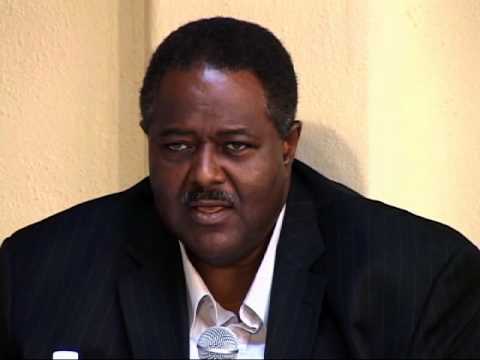
    We are pleased to share two videos of Tony Massengale, co-author of the Civic Organizing Framework.

    Tony Massengale demonstrates his distinctive presence, voice, strength of conviction in this 2014 video on collaboration. As co-author of the Civic Organizing Framework, we agreed there was a need for a new approach to political organizing. The outcome would not only produce more sustainable collaboration but would result in a new approach to governance for the common good as the method for doing so. We agreed that the solution strategy was organizing a base of sustainable institutional partnerships whose members would work with us on developing a way to drive civic organizing deep into institutional operations. We chose different ways to make our case.

    Tony built upon his established reputation as a consultant/organizer/ educator/lecturer working to conceptualize civic organizing within his leadership in 40+ collaborative networks. I chose to start with organizing MACI, a standalone cross-sector base of demonstrations and institutional members with a shared civic organizing agenda. 

    We found similar challenges summarized in Tony’s words: “partners presumed my approach/methodology was an extra thing to do rather than the thing to do. Or, that my unwillingness to focus solely on their ‘hot-button’ issue/problem was at best a missed opportunity to attract activists and activist dollars.” At the same time, there was an increased awareness of crisis in both institutional, national and global governance but this problem was not linked to the systemic inability to make progress in addressing problems. 

    In 2015, having no reason to question our initial analysis and facing our last stage of leadership for civic organizing, we agreed to focus our organizing on who would move forward to make a case for civic organizing within a cross-sector base of institutional partnerships. 

    Tony died in December 2016, while in the process of restructuring his model, winding up his tenure in county government, having enough time, knowledge, and financial autonomy to focus solely on this civic organizing agenda. In many ways, Tony’s death was tragic, but it re-enforced my resolve to see our experiment through. We moved forward to focus on the role of MACI Lead Organizer, determined by supporting only those who would test the Civic Organizing-MACI Model developed in stage 1-3 and to govern our progress in advancing the MACI purpose. In 2020 we will post institutional case study updates to track progress and lessons learned in the process. 

  • Reflections on Charlottesville

    Reflections on Charlottesville

    “I have a hope that we can raise a generation of white children who do believe there are structural impediments to equality that do produce injustices based upon class and race. I have to hope this generation will see that it is their work to do something about this condition. And I have to hope we can raise a generation of black children who know this to be true, know their part in it, know they cannot solve the problem alone, and are willing to work with others to do so. We do not have that generation yet but I have to believe it is possible.”
    Tony Massengale, co-creator of civic organizing model

    The events surrounding Charlottesville, Virginia recalls this conversation with Tony Massengale as we responded to media images showing the heartbreaking and disproportionate impact of Hurricane Katrina on African Americans in New Orleans. Our reflection focused on the inability to address these factors in a constructive manner.

    The human tragedies reflected complex, entrenched and systemic racial and economic disparities and, though Tony and I had different associations with that reality, we shared a common despair in our ability to address the problem, a common hope that it has to be possible, and common lifelong commitment to developing a new kind of organizing to put our belief to the test.

    Learn more about Tony Massengale and listen to short videos.

  • Introduction to Civic Organizing Videos

    These videos provide an overview of the Civic Organizing approach. The content is presented by Peg Michels, CEO of Civic Organizing Inc. and co-creator of the approach with Tony Massengale.

    Part 1 of 4 – Introduction to the need and key elements of Civic Organizing

    Part 2 of 4 – Defining Democracy

    Part 3 of 4 – Policymaking

    Part 4 of 4 – How We Do Civic Organizing

  • Building Civic Imagination

    Civic leaders who organize their key stakeholders to govern in the interest of the common good must first begin with civic imagination. This is a core concept in civic organizing that is owned and taught by all civic leaders who are building a base of active citizens: every decision you make in every place of your life impacts those who matter most to you and those who may matter least. Because of this, your decision-making amounts to governance and governance amounts to policymaking. As a member of a civic organizing agency, civic leaders understand that those who matter most and least are inextricably bound in the common good. We therefore must govern within this reality—everyone impacts the common good while pursuing their immediate interest.

    So now you are a member of a civic organizing agency. You are expected to advance your understanding and commitment to this reality into your leadership role. As you work with individuals who want what you stand for, start with the below guidelines for Introduction to Civic Organizing. The guidelines are based on a Civic Organizing Educational Track that supports you in organizing others so they can make a choice to take on your obligations. Members of a civic organizing agency would ensure that those who are interested in investing in a civic organizing approach know these expectations:

    1. Identify a jurisdiction. Participants in Intro to Civic Organizing identify a place (jurisdiction) where they will test a Jurisdiction Civic Policy Document.
      Evidence you are seeking: Each participant in the track identifies a jurisdiction in which they already have the authority to lead and to act.
    2. Identify purpose, goals and key stakeholders and relate to the common good. Participants identify the purpose of their jurisdiction and relate this to the public principles that define its value. They also begin to identify goals for their jurisdiction and the key stakeholders needed to achieve those goals, knowing they will go through revision as key stakeholders are organized to contribute. With ownership in goals, participants then learn how to integrate civic organizing into achieving them.
      Evidence you are seeking: Participants can identify goals to achieve within one year, can link these to civic principles, and show this link is owned by their key stakeholders.
    3. Teach roles of active citizen and civic leader. All stakeholders in a jurisdiction are citizens who are obligated to govern for the common good. Governing members of a civic organizing agency are civic leaders who organize the means for key stakeholders to meet this obligation. Civic standards govern how these roles are carried out through active citizen’s and civic leader’s practice.
      Evidence you are seeking: Participants use 1-1s to negotiate roles, get agreement on the value of active citizenship, and identify with the role of civic leader. Outcomes from the 1-1s track results, accountability and adherence to civic standards. Participants see the value of civic standards for advancing their jurisdictional goals. And they know they will govern their practice within a civic organizing agency if they chose to join (or form their own).
    4. Demonstrate a governing structure. Civic leaders teaching Intro to Civic Organizing structure the learning so it’s an experience in how a civic organizing agency works. This provides participants a way to determine if their interest is in alignment with the obligations (lead organizer criteria) for membership in a civic organizing agency.
      Evidence you are seeking:

    •  A regularly scheduled time and place for governing meetings, agreement on use of civic standards and on the organizing role as the basis for governance.

    •  A governing document. Includes a mission or purpose statement that reflects a civic organizing identity statement and civic standards for governance.

    •  A work plan that holds participants accountable for organizing key stakeholders to the purpose and civic standards while achieving goals. (May or may not be a formal civic organizing work plan.)
    The governing structure acts as a feedback loop to evaluate/improve the organizing each participant is doing with their stakeholders. Civic organizing disciplines Principled-Driven Calendar, Public Meeting, and Public Evaluation are used and tied to work plan.

    •  The outcomes document from each governing meeting provides evidence participants are aware of the purpose for Intro to Civic Organizing and can evaluate progress against civic standards and stated purpose. Practice is linked to the role of active citizenship.

    5. Contribute to making a case for civic policy making and advancing a Civic Policy Agenda. Evidence you are seeking. The final set of outcomes documents from Intro to Civic Organizing provide evidence that guidelines 1 through 4 above have been met and participants know what they’ve just experienced is a new approach to policymaking called civic policymaking. Finally, a process is provided so that participants can determine if they want to move forward and launch a new civic organizing agency or become a member of an existing one.

  • Frequently Asked Questions about Civic Organizing

    The questions most frequently asked by organization and community leaders who are exploring civic organizing reveal the immediate interests common to leaders across settings:

    • How do we get the right stakeholders at the table to address an issue and organize ownership across their diversity to implement solution strategies?
    • How can we organize a base of influence large enough to impact the complexity of the problem?
    • How can we create an on-going structure to ensure follow through on agreements and accountability for outcomes, sustain progress, and have impact at the scale needed?

    In most instances it is the first question that needs to be immediately addressed. My short answer is go get them. This is a quick way to introduce an organizing approach. Most individuals don’t get beyond the first question, and those that ask the second and third usually do so as a challenge that reveals their doubt in any real answer. I continue my quick answer to all three questions by saying they would apply an organizing approach to produce ownership, leverage complex resources, sustain the structure needed to establish accountability and achieve scale of influence. However, most individuals who ask the questions have little knowledge of the theory, language, and practice of organizing so a short answer is naturally heard as jargon. In fact, it is not uncommon for people to equate the practice of organizing with being organized in their work.

    Those who have some experience with organizing see it as a protest strategy, or partisan, issue-driven campaign, with the aim to advance a particular program or strategy, put pressure on or perhaps take over some external system. Many of us have been recipients of such organizing.

    Depending on their experience of organizing, people have a good or negative feel about the word. If it is a good feel they usually say they are already doing civic organizing. In either case, they do not immediately imagine how an organizing approach would apply to the questions and challenges they raise, how those challenges relate to their own role, their internal operations, and the way they govern within their organization.

    Since members of the Minnesota Active Citizenship Initiative have addressed these three challenges through organizing within their own institutional settings and have instituted policies to sustain their organizing practice, I can use illustrations of how it applies and what it looks like. However, before going very deeply into how to address the immediate and interrelated challenges leaders ask about through an organizing approach, those of us who make a case for civic organizing always do so within the context of what we believe is the larger, related, and fundamental question for our time:

    How do we sustain democracy as a just system of governance when their appears to be little interest in the role of citizenship as the basis for governance, evidence of little progress made in addressing intractable systemic public problems which are producing serious divides, inequities, damage to the environment, and increasing cynicism in our ability to govern justly and wisely?

    Those who make an investment in civic organizing, do so because their immediate needs are addressed within this larger question. See the Civic Governance case study and other case studies posted within this website for examples.

  • A Civic Business: Kowalski’s Markets and Democratic Principles at Work

    By Jeff Linder, store manager of Kowalski’s Oak Park Heights market.

    In the last 10 years, Kowalski’s Markets has dedicated substantial resources in terms of time and money to send all of their leadership personnel through an in-depth training course on civic organizing and civic leadership. Owners Jim and Mary Anne Kowalski take their obligation to be more than just a successful business very seriously. What they and their company have undertaken is a new approach to policy making, based on democratic practices, which we use to solve business issues and meet our goals.

    So how does civic policy making work in our company? Over the last several years, we have been focusing on building a civic infrastructure within our company. Everyone in key positions from our COO and VP, to our corporate staff and all department managers is called a “Civic Leader”. This group is tasked with the responsibility to teach and organize the rest of our employee base (stakeholders) to understand the identity of the company and the role they play in it. These employees are called “Active Citizens.” The nature of our business is that a high percentage of our stakeholders are part-time and entry-level employees. To organize this group, which includes a large number of young people that typically do not stay in our employ for a long period of time, is a large task, and we are definitely still in a phase where we are learning how to most effectively organize them to their role.

    A key ingredient of our mission is our public meeting strategy. In addition to the organizing and capacity building that occurs on a daily basis, all management personnel are expected to have regular one on one meetings with their key stakeholders and quarterly or semi-annual meetings with their entire department. The goal of these meetings is to integrate the technical aspects of our business with the individual roles of active citizens by focusing on our identity with particular emphasis on our operating principles (the primary policy document within our company).

    When our employees involve themselves in policy making within these meetings, they are sharing the responsibility to help create success in their department, store and the company they work for. This process is open and transparent, and in their role of active citizen, they contribute to civic policy making by being public with concerns, being involved in problem solving and achieving goals and contributing to justice and the common good. When these stakeholders begin to understand that every decision they make has an impact on everyone else around them as well as the success of our company, they tend to make better and more responsible decisions. The idea that we clearly expect them to be involved in decision making around the opportunities and challenges that we face every day tends to create a strong sense of ownership among our employees.

    While we are still learning this new approach, there is a strong commitment to sustaining our efforts, because we have substantial evidence that it is working to create a base of employees who understand that their role needs to be one of involvement and ownership, whether it is around quality of product, customer service, attendance or any other issue. At the entry level, there is a vague sense of being part of something new and different, with a certain amount of surprise and satisfaction that even in their positions we ask them to be involved in policy making and to contribute to justice and the common good. Our long term part-timers, of which there are many, have begun to fully understand that they are key stakeholders in our company and that their role is critical to sustaining our company as a successful civic business into the future. The level of ownership among this group has surpassed anything I have seen among comparable employees in the nearly 40 years I have been in this business.

    Civic organizing and this new approach to policy making has really made us a much better, more effective and productive business, which ensures our sustainability into the future. However, we must recognize this as a tremendous benefit of this approach, but not at all the primary reason we became involved in it. As the influence of civic organizing continues to grow within our company, we hope and expect to see both the civic leaders and active citizens take what they have learned outside the walls of our company to help create a new approach to policy making in the greater world, where current approaches are riddled with apathy, hypocrisy and ineffectiveness.

    This is the mission of the Minnesota Active Citizenship Initiative of which we are a member, alongside the Citizens League and the Islamic Civic Society of America (ICSA), and we are committed to achieving this mission. Whether it is existing employees within neighborhood or community organizations, or employees who have moved on to new employers and/or occupations, we are confident that they will bring the concept of civic organizing and civic policy making to their new institutions in the places where they have influence. By doing so they will be expanding this new approach to policy making we call civic organizing, to help create a more effective way to achieve justice and the common good.

  • How Citizens Use Politics to Act

    Human beings are political by nature. Politics is what we do when we define problems and advance solution strategies. In the process, we follow, set, ignore, or break rules.

    Politics is always grounded in a set of principles or values that justifies the need to take action and achieve our purpose. A person or organization can do politics effectively or ineffectively. I think about my daughter’s first word, saying kitty as she pointed to our cat (apparently, the cat had some value to her). Very quickly she could say, I want kitty (apparently, a motivating principle) as she reached to grab the cat in a not-so-gentle hug, an action that resulted in an outraged cat, ever more resistant to meeting my daughter’s purpose. My daughter’s scratched arm caused her to question the value of kitty. Since I see all actions as part of a political dynamic, what followed was a ‘policy making’ session on how to develop a more effective way to relate to kitty.

    Although we associate politics with achieving a purpose in a larger public realm—the bosses office; the board room; or local, state, national and international governments—civic organizing makes the case that individuals are being political whenever they attempt to achieve something they value.

    This is not a common understanding of politics so we start with the literal meaning—the work of the citizen. The meaning is derived from the Greek word, polis: the governing jurisdiction of ancient Greece. Within the polis, Greeks linked the function of governance to the role of citizen. The principle role of citizenship was to govern for the common good. Politics was the way to carry out that role.

    In a civic organizing approach, we borrow from this conception of politics and call it citizen politics. The following provides a concrete example of how citizen politics works in our 21st century democracy.

    The Civics of Curb Cleaning

    Janna Caywood is organizing a cleanup in her Saint Paul neighborhood. Here is her description of the effort:

    Como Curb Cleanup – October 13th through October 21st
    The Como Curb Cleanup, is a collaborative effort among Como neighbors and several cross-sector partners to prevent as much organic debris as possible – namely dead leaves – from washing or blowing down our street storm drains. The project is organized by the Como Lake Neighbor Network and by District 10, but is led by hundreds of Como residents who, collectively, prevent thousands of pounds of a major phosphorus source from entering Como Lake and the Mississippi River. Through this community-wide effort we prevent further degradation of our local waters and we advance a key solution strategy for Como Lake – reducing phosphorus pollution at the source.”

    As Janna is organizing with her neighbors she is making the case for linking this effort with the function of politics and the role of citizenship.  Her neighbors “might not think that cleaning up leaves in Como has anything to do with citizenship and democracy,” but as Janna reminds us “the Como Curb Cleanup is about a lot more than raking up a few leaves.”

    “At its core, this project is really about our role as citizens, impacting the kind of Como community we want while ensuring that our individual efforts contribute to addressing the large and complex issue of restoring clean water.”

    Janna is asking individuals to claim the identity of citizen as much as she is asking them to become a neighborhood volunteer. What difference does that identity make? As citizens, all those involved in this project— neighbors, District 10 leaders, representatives of governmental agencies—would have a say in defining the project’s purpose, goals, and measures for determining success. Together they would define what they consider the common good. Everyone who sees his or herself as part of the problem must help  make it clear that everyone also has a role in producing the solution.  Acting as citizens lessens the tendency to look only to government agencies for solving issues and increases understanding of why all of our insights and contributions are required.

    After the cleanup event, Janna will organize an evaluation of the effort against the purpose and goals that were co-created by all of the stakeholders involved. She will use that experience to again link the political functions to the role of citizenship and the meaning of citizen politics and move forward. According to Janna:

    “In 2013 we hope to launch a year-long project to bring ourselves up to speed on our lake’s condition and take on this question of Como Lake’s restoration and what our role, as members of the public, as citizens, should be. And to determine what kinds of community supports and civic leadership training we need to achieve our goals and vision.”

    In the next installment of this series, I will address where citizens do politics.

    By Peg Michels. Michels is the founder and executive director of Civic Organizing, Inc., a partner in the Minnesota Active Citizenship Initiative.

  • Politics We Need

    Many individuals and systems have chosen to disassociate with politics—some even openly speak out against politics. Even politicians say, “Oh, it’s just political” as if the process that defines their work is degrading. When I hear politicians say this, I think, would a teacher say, “Oh, that’s just education” referring to teaching as if it were evil.

    At the heart of civic organizing is the belief that this disassociation with the very function that produces democracy is a root cause for our inability to address the complex problems we face today.

    The Work of the Citizen

    Politics is simply the function by which individuals and groups attempt to influence a course of action. The word ‘politics’ is derived from the Greek word ‘polis’ (governing jurisdiction). The Greeks believed that the role of the citizen was to govern. Politics was the way to carry out that role. In a democracy, individuals who identify with the role and obligation of citizenship should use politics to fulfill their role. The result should be good governance.

    Politics are not intrinsically good or bad. How ethical they are has to do with the purpose and the standards of the people doing the politics. When citizens do not see politics as legitimate work, core to effective democracy, politics will inevitably falter at producing good governance. Even so, politics do not go away—human beings are inescapably political.

    What People Say About Politics

    Before launching the Minnesota Active Citizenship Initiative, we held countless meetings with every social grouping that makes up Minnesota and American society. When asked what comes to mind when you hear the word politics, the response was overwhelmingly negative, with comments like “it sucks” or worse. When asked who does politics, the response was “crooked politicians.” When asked how they would describe themselves, they responded, “innocent victims.”
    Despising politics provides an excuse to ignore all things political. As a result, individuals are not accountable to their role in developing the public discernment necessary to address complex public problems and to sustain democracy as a just system of governance. In this vacuum, ideologues, whose only purpose is to win, have high jacked politics.

    Citizen Politics

    Those who practice civic organizing believe that a politics that is driven by citizens and focused on common interests is necessary for a just democracy. We do not imagine that this would obliterate particular interests, and harmony is not the goal. It is just the opposite. Different interests that surround complex problems are held in tension with the democratic principles that apply to all. This constructive tension, contained by a common search for the public good, produces a ‘good enough politics.’

    We, as citizens, need to let go of our cynicism and step up to our responsibilities to reclaim politics and use it to create the democracy that we desire. Watch for my next post about how citizens use politics to act.

    By Peg Michels. Michels is the founder and executive director of Civic Organizing, Inc., a partner in the Minnesota Active Citizenship Initiative.

  • Why Tony Massengale and I Co-authored
    the Civic Organizing Framework

    In the realization that something is wrong with the very civic fabric of our society rather than simply the ethics of individuals or any one sector, Tony Massengale and I (with the help of many key partners) co-authored the Civic Organizing Framework.

    Organizing and Political Traditions

    Both Tony and I were mentored in organizing and political traditions. The only way one becomes an organizer is through practice and through apprenticeship by a senior or lead organizer within an organizing agency. We both were involved in the protest movements and electoral politics of the sixties and seventies. My apprenticeship came out of electoral organizing, or what is now called partisan politics. I was a field organizer in large-scale electoral campaigns during the eighties. Tony was a student of the Black Power Movement, and formally apprenticed in community-based organizing through the Industrial Areas Foundation, a national and now international organization founded by Saul Alinsky.

    Renewing the Field of Organizing

    At the same time that we honor our life work and adapt the “best practices” of our organizing experiences, we have come to the conclusion that the field of organizing needs to be renewed in light of its own principles. That is what led us to develop a new kind of organizing called civic organizing. Its aim is to restructure professional work in order to create institutions that are accountable to democratic principles.

    We argue that in the 19th and 20th century organizing improved the lives of many people, especially those in the working and middle class and those left out of the promises of American democracy. It did so by democratizing fundamental institutions to make them more relevant in their time. We believe the same needs to be done in the 21st century. We believe that a new kind of organizing is required that once again engages those of us in the middle whom, because of the political successes since the sixties, now are the system. The new kind of organizing moves beyond one issue, one community, one institution, and beyond adversarial politics and instead practices and teaches a new kind of politics that goes deep inside systems to renew them in light of today’s global economy.

    Civic Organizing

    Civic organizing produces a base of institutional partners accountable to the literal meaning of politics (the work of the citizen), the literal meaning of justice (to seek the right relationship), the literal meaning of public (a mature people) and the principles of organizing. Together we create a climate for civic renewal within our systems, leverage and restructure institutional resources, organize and support a constituency base of other leaders who use their practice to make a case for a new kind of politics and policy making to renew a civic infrastructure that makes democracy an effective form of governance.

    By Peg Michels. Michels is the founder and executive director of Civic Organizing, Inc., a partner in the Minnesota Active Citizenship Initiative.